



 English

-1.jpg "Extract Tea Bag")
-1.jpg "Other Drink Powder")
The Rise of Flavored Spirits: Why Distilleries Are Using Fruit Juice Concentrates
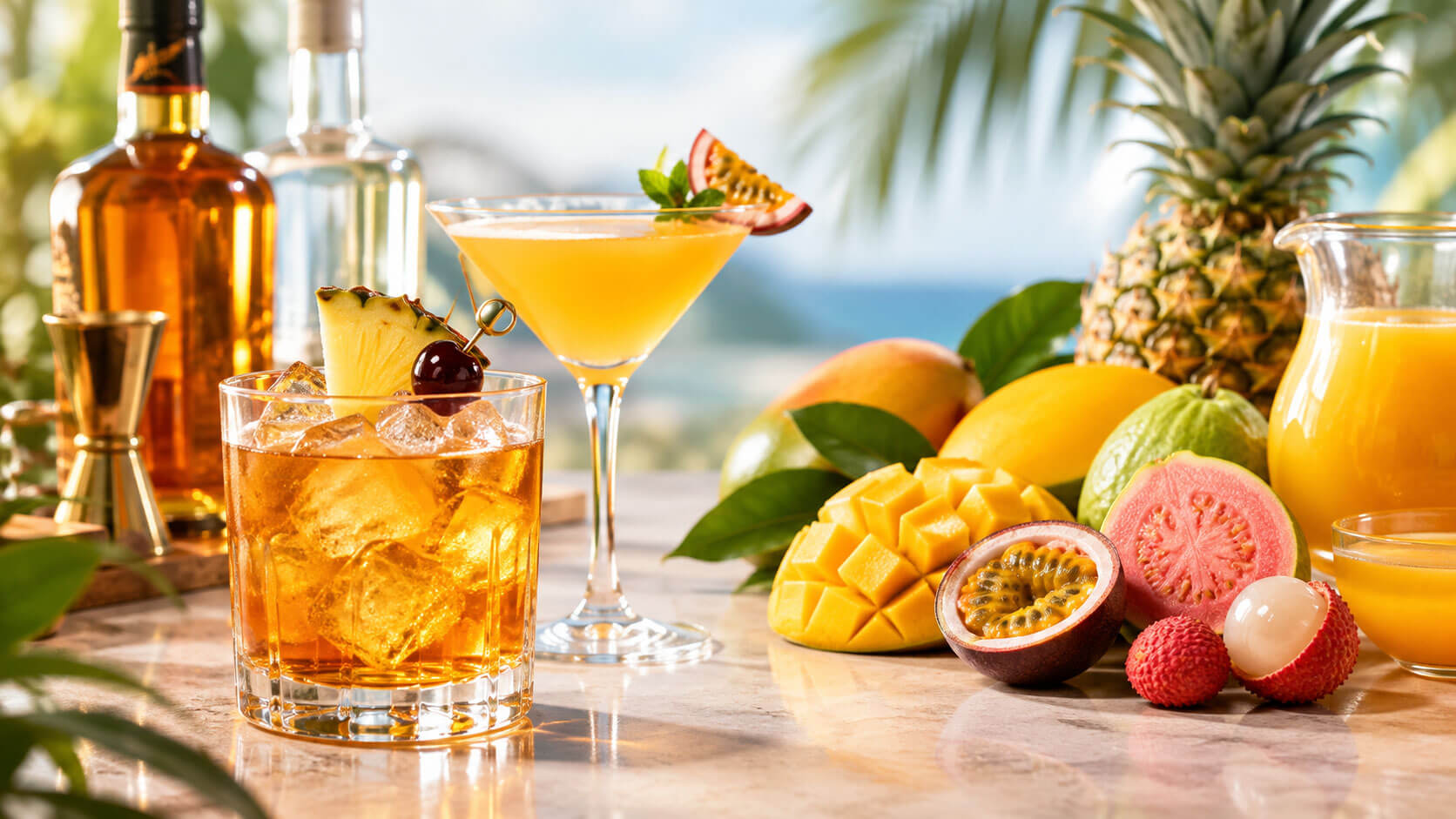
Flavor is an important part of developing differentiated spirits and RTD beverages. For manufacturers considering fruit-based formulations, fruit juice concentrate is one ingredient option worth evaluating alongside fresh fruit and flavourings. This article looks at ingredient selection, concentrate specifications, tropical fruit flavors, and supplier considerations.
Distilleries may use fruit juice concentrates for spirits because concentrates can help address several challenges associated with fresh fruit. Standardized specifications can support more consistent formulation between batches, concentrated products can reduce dependence on seasonal fresh-fruit availability, and measurable factors such as °Brix and acidity give manufacturers useful parameters for formulation and testing. These characteristics make fruit juice concentrates one option to consider when developing flavored vodka, gin, liqueurs, and spirit-based RTDs.
- Spirit-based RTDs are projected to grow strongly through 2033, creating more opportunities for beverage brands to develop new fruit-forward spirit and RTD concepts.
- Fruit juice concentrates can offer advantages in consistency, storage, and handling compared with fresh fruit, while fresh fruit and flavourings remain suitable for different formulation priorities.
- °Brix and acidity are important specifications to review, but manufacturers should also consider the target ABV, clarity, stability, and other finished-product requirements.
- When evaluating a fruit juice concentrate supplier, manufacturers should consider specification flexibility together with certifications, traceability, sample availability, MOQ, lead time, and logistics.
The Growing Market for Flavored Spirits and RTDs
The ready-to-drink cocktail market was valued at roughly $3.7 billion in 2025 and is forecast to reach about $10.7 billion by 2033, a compound annual growth rate of 14.1%. Inside that number is a more interesting one: malt-based products still hold the majority of the shelf, but spirit-based RTDs are projected to grow at approximately 20.5% annually from 2026 to 2033. This growth is creating more opportunities for beverage brands to explore differentiated spirit bases, fruit flavors, and cocktail-inspired formulations. Asia Pacific is the fastest-growing region in the same forecast, at roughly 14.9% a year — worth noting for any producer thinking about where the next volume comes from, and where the flavor references are being set.
Growing Interest in Tropical Fruit Flavors
In a category where the base liquid is often difficult to differentiate, flavor has become the primary lever. Mintel's 2026 research found that 43% of 18–24 year olds are interested in exotic fruit flavours — not lemon and lime, but mango, guava, passion fruit, lychee. Traditional profiles have not disappeared, but the growth is at the tropical end, and that is precisely the end that is hardest to supply.
Faster Product Development Raises the Need for Ingredient Consistency
Beverage brands increasingly need to respond to changing flavor preferences, seasonal opportunities, and new product concepts. This makes ingredient consistency and availability important considerations during product development.
Fresh and frozen fruit can introduce additional variables into product development, including seasonal availability, natural variation in sugar and acidity, storage requirements, and preparation steps such as pressing or filtration. Fruit juice concentrate can help simplify some of these variables and provide manufacturers with another option for developing repeatable fruit-based formulations.
Fresh Fruit vs. Flavourings vs. Fruit Juice Concentrates
There are three realistic routes to fruit character in a spirit, and each has a genuine trade-off.
| Criteria | Fresh / Frozen Fruit | Natural Flavouring | Fruit Juice Concentrate |
| Flavor authenticity | Highest — full fruit | Selective, aroma-led | High — aroma + sugars & acids |
| Batch consistency | Low; varies by lot | Very high | High; to spec |
| Seasonality risk | High | None | Low — stock held year-round |
| Shelf life | Days to weeks | 6 months – 1 year | 1 year |
| Storage & freight | High — water & weight | Very low | Moderate — water removed |
| Label claim | Strongest | Weakest | Strong — fruit-derived |
| Dosing precision | Low | Highest | Moderate to high |
| Haze / sediment risk | High (pectin, pulp) | Very low | Low–moderate |
| Cost per unit of flavor | High at scale | Lowest | Competitive at scale |
Each option serves different formulation priorities. Flavourings can offer advantages in dosing precision and clarity, while fresh fruit may be preferred when provenance and minimally processed ingredients are central to the product concept. Fruit juice concentrate can provide a practical middle ground for manufacturers seeking fruit-derived ingredients with greater consistency and easier handling than fresh fruit.
Match the Fruit Concentrate to the Beverage Application
The same fruit concentrate may behave differently in flavored vodka, liqueurs, spirit-based RTDs, and beer. Alcohol level, sweetness target, acidity, clarity requirements, carbonation, and processing conditions can all affect formulation decisions. Manufacturers should therefore evaluate concentrate specifications against the intended beverage application rather than selecting an ingredient based on flavor alone.
What to Check on a Fruit Juice
Flavor description alone does not indicate how a concentrate will perform in an alcoholic beverage. Specifications such as °Brix and acidity, together with the intended ABV and finished-product requirements, provide more useful information for formulation and testing.
°Brix : Concentration, Sweetness, and Dosing
Brix is the soluble solids content, and for fruit juice concentrate it is the number that governs both dosing and the sweetness of the finished drink.Ask for the Brix tolerance, not just the target: a ±1 °Bx band and a ±3 °Bx band are very different things to formulate against.
Acidity and Its Role in Flavor Balance
Acidity does two jobs in a flavored spirit. It carries the perception of freshness — a passion fruit vodka with the acid stripped out reads as sweet and flat — and it influences the stability of the blend over time. Acidity also contributes to the perceived freshness and balance of fruit flavors. Because acidity can vary depending on the fruit and processing method, it should be evaluated alongside °Brix and the characteristics of the intended beverage base during formulation trials.
Clarity and Stability in the Finished Beverage
Alcohol content and interactions with naturally occurring fruit components can affect clarity and stability in the finished beverage. A concentrate that appears stable in one formulation may behave differently at another alcohol level or under different storage conditions. Manufacturers should therefore evaluate the concentrate in the intended finished formulation and conduct appropriate stability testing before commercial production.
Tropical and East Asian Flavors for Spirits and RTDs
Tropical and East Asian fruits can broaden the flavor options available to distilleries and beverage developers. Fruits such as passion fruit, lychee, mango, and other regional profiles can be used to explore flavor combinations beyond more established citrus and berry offerings.
Passion fruit
Passion fruit brings high acidity and a sulphurous, tropical top note that survives dilution in a way most fruits do not — Its distinctive acidity and tropical profile can make it suitable for RTDs and flavored spirit concepts.
Lychee
Lychee is the opposite problem: delicate, floral, and easy to lose. It works best in lower-ABV serves and clear spirits where nothing competes with it, and its delicate floral profile can require careful formulation, particularly in products where other flavors may compete with it.
Mango
Different mango varieties can produce noticeably different sweetness, aroma, and flavor profiles, making cultivar an important consideration when selecting an ingredient.
Yuzu & Plum
carry the "Asian-inspired" positioning that Western bar culture has adopted rapidly, with an acid profile that suits spirit-forward serves.
For manufacturers evaluating tropical fruit concentrates, sourcing origin, harvest conditions, processing methods, and specification consistency are all useful factors to consider.
How to Evaluate a Fruit Juice Concentrate Manufacturer for Spirits Production
A sample is only the beginning of supplier evaluation. Manufacturers should also consider whether a supplier can support consistent specifications, documentation, logistics, and future production requirements. Six questions can help:
- Which food safety certifications are in place?
Depending on the target market and customer requirements, certifications or systems such as ISO, HACCP, FSSC, HALAL, or KOSHER may be relevant.
Can °Brix and acidity be adjusted to the formulation, or is the concentrate available only in standard specifications? This helps manufacturers understand how much flexibility is available during product development.
- Is a Certificate of Analysis issued per batch, with lot traceability?
These documents can support quality control, supplier management, and traceability requirements.
- What are the sample quantities, MOQ and lead time?
Sample availability should therefore be evaluated together with commercial MOQ and lead time.
- How is it packed and shipped?
Drum and pail formats, pallet configuration, transit temperature, and realistic sea-freight timing to your plant.
- Can the supplier support trial quantities?
New beverage development often begins with smaller-scale testing, so manufacturers should confirm sample availability, trial quantities, and the MOQ required for commercial production.
Similar supplier considerations can apply to brewers sourcing fruit concentrates, although formulation and stability requirements differ between beer and spirits.
Sunnysyrup’s Fruit Juice Concentrate Capabilities
Sunnysyrup manufactures concentrated fruit juices and syrups in Taiwan, with more than 70 fruit-based flavors in production and ISO, HACCP, FSSC, HALAL and KOSHER certification. Our tropical range — passion fruit, mango in several varieties, lychee, strawberry, blueberry and grapefruit — is produced close to the harvest, and our OEM/ODM capability means Brix and acidity can be adjusted to a customer's formulation rather than sold as a fixed standard.
Sunnysyrup's concentrated fruit juices are used across beverage and foodservice applications, and we have previously supplied fruit concentrate for a craft beer application. Building on its experience in fruit-based beverage ingredients, Sunnysyrup is also exploring opportunities to support manufacturers developing flavored spirits and RTDs. You can discuss available concentrate specifications, customization requirements, and sample options with the Sunnysyrup team for further evaluation.
Fruit Juice Concentrates for Spirits: FAQs
Can fruit juice concentrate be added directly to vodka?
Fruit juice concentrate can be used in spirit-based formulations, but the appropriate process depends on the concentrate, target ABV, sweetness, acidity, clarity requirements, and production method. Manufacturers should evaluate the ingredient in the intended finished formulation rather than assuming that the same process will apply across different spirits.
Will fruit concentrate change the colour of the spirit?
Usually yes, to some degree. Concentrates retain the natural pigments of the fruit, so red and tropical fruits tint the liquid. If a clear product is required, ask for a clarified or decolourised grade — but manufacturers should confirm how additional processing may affect the desired flavor and appearance.
Does concentrate cause cloudiness or sediment over time?
Haze or sediment can occur depending on the fruit components, processing method, alcohol level, and finished formulation. Appropriate concentrate selection and stability testing under the intended product conditions can help manufacturers identify potential issues before commercial production.
How much concentrate per litre of finished flavored vodka?
There is no universal figure — it depends on the concentrate's Brix, the fruit and the intensity you target. Most producers begin at a low percentage by volume and adjust upward across three or four batches.
Can the same concentrate be used for beer as well as spirits?
A fruit concentrate may be suitable for both beer and spirit applications, but the formulation requirements are different. Brewers should consider factors such as fermentable sugars, clarity, stability, and the intended brewing process when evaluating a concentrate, and should specify the final application when requesting samples.
Talk to the Sunnysyrup Concentrate Team
Exploring fruit juice concentrates for flavored spirits, RTDs, or craft beer? Share your target fruit profile, beverage application, and formulation requirements with Sunnysyrup. Our team can discuss available concentrate specifications, customization options, and sample availability for further testing.
Related Reading
- How to Choose the Right Fruit Juice Concentrate for Flavored Vodka and Spirits
- Fruit Juice Concentrates for Beer: Aroma, Haze and Dosing in Fruited Ales & Radlers